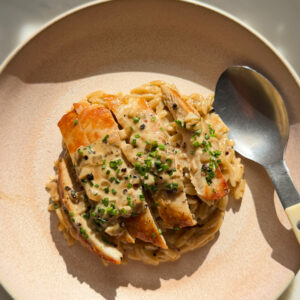
One-Pan Chicken Orzo Au Poivre
This One-Pan Chicken Orzo Au Poivre pairs pan-seared chicken with tender orzo in a creamy black pepper sauce for a cozy, 35-minute dinner.
Servings: 4
Equipment
- medium braiser
Ingredients
- 2 chicken breasts boneless, skinless
- 2 teaspoons kosher salt divided
- 1 tablespoon olive oil
- 2 tablespoons unsalted butter
- 1 tablespoon very coarsely ground black pepper
- 1 large shallot finely diced
- 3 garlic cloves minced
- 1 teaspoon fresh thyme
- ¼ cup dry white wine
- 8 ounces dried orzo
- 2½ cups chicken broth
- ¼ teaspoon dijon mustard
- ½ cup heavy cream
- chopped chives for garnish
Au Poivre Sauce (optional):
- 1 tablespoon unsalted butter
- 1 teaspoon coarsely ground black pepper
- 1 small shallot finely diced
- 2 garlic cloves minced
- 1 sprig of thyme stem removed
- ½ teaspoon kosher salt
- 3 tablespoons dry white wine
- ¼ cup chicken broth
- ¼ cup heavy cream
Instructions
- Slice the chicken breasts in half lengthwise so that you get 4 thin slices of chicken. Season chicken breasts on all sides with 1 teaspoon of kosher salt.
- In a medium braiser, over medium-high heat, add the olive oil to coat the pan. Once the oil is shimmering and you can feel the heat when your hand hovers the pan, add the chicken breasts, smooth side down.
- Sear the chicken for 3 minutes on one side and then flip and sear for another 3 minutes or until a thermometer inserted reaches 150F. We want them completely cooked through. You may have to do this step in batches. (Note: If you have a meat weight, this is a good place to use them, it helps with even browning.)
- Remove the chicken from the pan and set aside. Melt the butter in the pan, then add the coarsely ground black pepper, shallots, garlic, and fresh thyme. Season with the remaining teaspoon of salt. Stirring often to cook the aromatics in the butter, about 3 minutes.
- Deglaze the pan with the white wine, stirring to pick up the brown bits on the bottom of the pan. Now stir in the orzo, toasting it a bit in the pan and mixing in all that flavor. Add the chicken broth and bring to a simmer, stirring occasionally to gently pick up any orzo stuck to the pan. Simmer the orzo for 10 minutes.
- Turn off the heat and stir in the dijon mustard and heavy cream. Check for seasoning and salt to taste, I added a few pinches at the end.
Au Poivre Sauce (optional):
- If you’re making the extra au poivre sauce on the side, here’s how you do it. In a small saucepan, over medium heat, melt the butter. Once bubbling, add the black pepper, shallot, garlic, and thyme. Season with salt, and cook until fragrant, about 3 minutes. Deglaze with the white wine, picking up any bits in the pan. Then add the chicken broth and let the sauce come to a simmer. Let the sauce reduce slightly and the alliums soften, about 3 minutes. Lastly, stir in the heavy cream, allow the sauce to thicken enough to coat the spoon, then remove from the heat.
To Serve:
- Slice up the chicken breast and add it on top of the orzo. Pour the extra sauce over the top and sprinkle with as much chopped chives as your heart desires.
Notes
Tips & Recipe Notes
Keep the black pepper coarse. Use the coarsest setting on your pepper mill. If you don’t have a pepper mill or mortar and pestle, place whole peppercorns in a sturdy resealable bag, press out the air, and seal. Set it on a cutting board and gently crush with a mallet or rolling pin. Measure the pepper after crushing, and avoid grinding it into a fine powder. Check the pasta before adding the cream. If it needs a little longer and the pan is looking dry, add a splash of broth and continue simmering until tender. Serve immediately. Orzo continues absorbing liquid as it sits, so it’s best served right away. If it thickens too much, add a splash of broth and gently warm it over low heat to loosen the sauce. The extra sauce is optional. The orzo is already creamy and peppery on its own. Make the sauce when you want a little more to spoon over the chicken; you’ll need a separate small saucepan for it.Storage & Reheating
To store: Let the chicken and orzo cool slightly, then transfer to an airtight container and refrigerate. To reheat: The orzo will absorb more sauce as it sits, so add a splash of chicken broth to loosen it up. Warm the chicken and orzo in a pan over low heat, stirring gently and adding more broth as needed, until heated through.Nutrition
Calories: 653kcal | Carbohydrates: 51g | Protein: 35g | Fat: 32g | Saturated Fat: 17g | Polyunsaturated Fat: 2g | Monounsaturated Fat: 10g | Trans Fat: 0.4g | Cholesterol: 149mg | Sodium: 2208mg | Potassium: 747mg | Fiber: 3g | Sugar: 5g | Vitamin A: 1012IU | Vitamin C: 5mg | Calcium: 90mg | Iron: 2mg
